
Maybe your mind is always one step ahead of you.
You think through the conversation before it happens.
Then you replay it afterward.
You notice the text that has not been answered. The look on someone’s face. The thing you forgot. The deadline coming up. The decision you still have not made.
Even when nothing is technically wrong, part of you may still be waiting for the next thing you need to handle.
You may look calm and capable on the outside while internally your mind is running through twelve different possibilities at once.
And you are tired.
Not just physically tired.

Tired of thinking. Tired of anticipating. Tired of trying to make sure nothing goes wrong
When Your Mind Won’t Turn Off
Maybe you call it overthinking.
You lie in bed exhausted, but your brain decides that 1:00 a.m. is the perfect time to revisit something you said three days ago.
Did I sound rude? Are they upset with me? What if I made the wrong decision? What if I forgot something important? What if this gets worse?
You may rehearse conversations before they happen, rewrite emails five times, ask someone you trust whether you are “overreacting,” or research until you feel even less certain than when you started.
You may know logically that there is no emergency.
But your mind keeps trying to solve one anyway.
Sometimes anxiety feels like fear.
Sometimes it feels like responsibility without an off switch.
Your Body Can Feel Anxious Before You Know Why
Anxiety does not always begin as a thought.
Sometimes your body gets there first.
Your shoulders tighten. Your stomach drops. Your jaw hurts from clenching. Your heart races. Your breathing becomes shallow.
You may feel restless, shaky, hot, dizzy, nauseated, or suddenly exhausted.
Maybe sleep becomes harder because your body does not seem convinced that the day is actually over. Or you wake up already tense, as though you missed the part where everyone else got to start from neutral.
You may even find yourself thinking:
Nothing is wrong. Why do I feel like this?
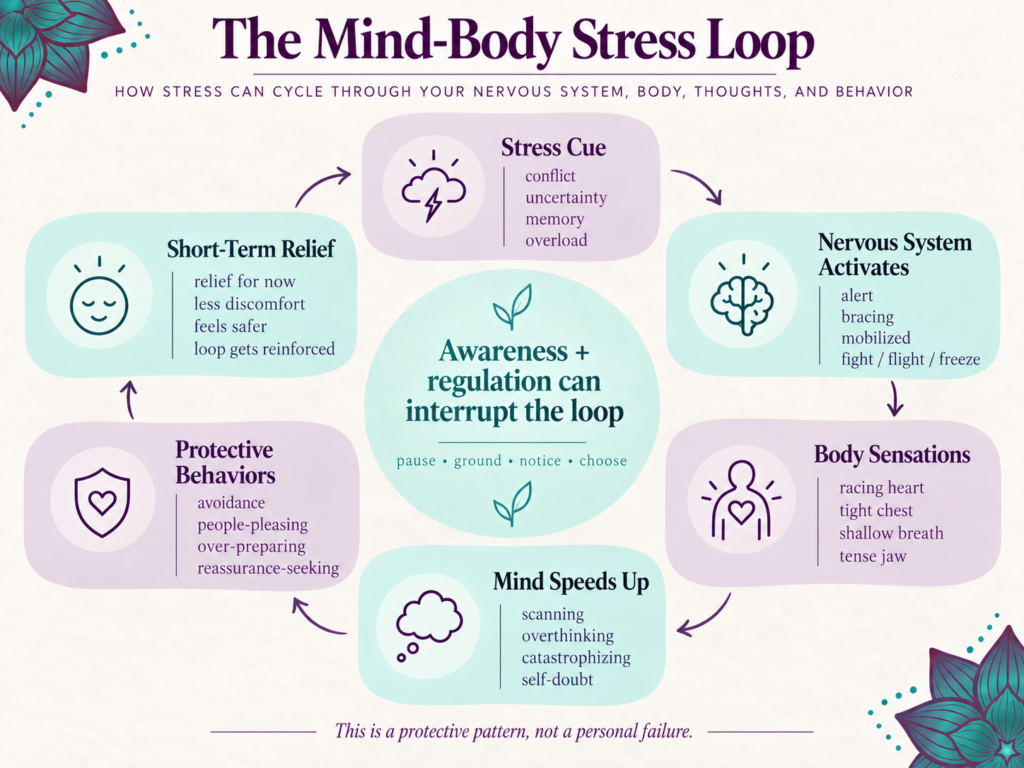
Because your nervous system does not only respond to what is happening in the moment.
It also responds to what it has learned to watch for.
Stress and Anxiety Are Not Quite the Same Thing
Stress is part of being human.
A deadline, difficult conversation, financial problem, illness, family conflict, major change, or overloaded schedule can create a very understandable stress response.
Often, when the situation settles, your system begins to settle too.
Anxiety can be different.
The immediate problem may be over, but your mind and body keep preparing.
You keep scanning.
You keep wondering.
You keep trying to get ahead of something you cannot quite name.
Sometimes anxiety develops around a clear fear.
Sometimes it feels more like a constant background hum.
And sometimes stress and anxiety become so intertwined that it is difficult to tell where one ends and the other begins.
Therapy can help you begin separating what is happening right now from what your mind and nervous system have learned to expect.
Anxiety Can Look Like Control
Anxiety does not always look visibly anxious.
Sometimes it looks incredibly organized.
You make lists, plan ahead, double-check, arrive early, prepare for every possible outcome, and try to make sure everyone is okay.
You may hold yourself to standards you would never expect from another person. And when something goes wrong, even something small, you may immediately wonder what you should have done differently.
Perfectionism can feel safer than uncertainty. People-pleasing can feel safer than disappointing someone. Overexplaining can feel safer than being misunderstood. Avoiding a decision can feel safer than making the wrong one.
Staying busy can feel safer than slowing down long enough to notice how overwhelmed you actually are.
These strategies may help you feel more in control for a moment.
But they can also become exhausting.
Sometimes Avoidance Shrinks Your Life
Anxiety has a way of convincing you that relief is just on the other side of avoiding the uncomfortable thing.
So you cancel. Postpone. Stay quiet. Do not send the email. Do not ask the question. Do not drive there. Do not go alone. Do not speak up. Do not apply. Do not risk being embarrassed, rejected, disappointed, or wrong.
And for a little while, the anxiety drops.
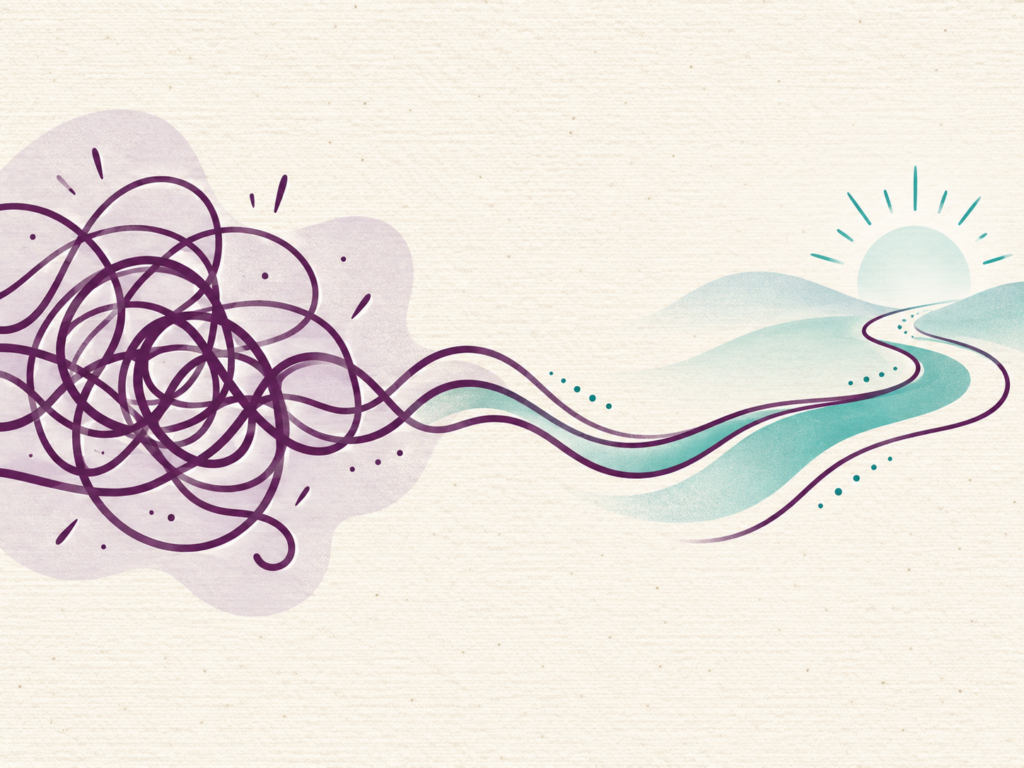
That relief can make avoidance incredibly powerful. But over time, your world may start getting smaller.
You may begin organizing your life around what feels safest instead of what actually matters to you.
Therapy can help you change that pattern gradually—not by forcing you into situations before you are ready, but by helping you build enough confidence and tolerance to stop letting anxiety make every decision.
You Do Not Have to Believe Every Thought Your Anxiety Gives You
Anxiety can be persuasive. It speaks in certainty.
This is going to go badly. They are upset with you. You cannot handle this. If you make the wrong choice, you will regret it. You need to figure this out right now.
The goal is not to never have another anxious thought.
It is to become better at noticing:
This is a thought. This is a fear. This is my nervous system reacting. I do not need to treat it as a fact.
That small amount of space can change a lot.
Therapy Can Help You Build More Room Around the Anxiety
We are not interested in telling you to “just stop worrying.”
If it were that simple, you would have done it already.
Therapy may include learning how your nervous system responds to stress, noticing the thinking patterns that keep anxiety going, understanding where perfectionism or people-pleasing developed, practicing new ways of responding to uncertainty, and gradually approaching situations you have been avoiding.
Depending on you and the therapist you choose, that may include cognitive strategies, nervous-system regulation, relational work, parts work, trauma-informed approaches, or EMDR when clinically appropriate.
There is no single formula. The work is collaborative.
And the goal is not to turn you into someone who never feels anxious.
More Freedom, Less Fear Running the Show
The goal is more room to breathe.
More ability to notice when anxiety is speaking without immediately obeying it. More confidence making a decision without needing absolute certainty. More willingness to have the difficult conversation.
More ability to rest without feeling like you should be doing something. More trust that discomfort does not automatically mean danger.
More freedom to choose your life based on what matters to you—not only on what helps you feel safest in the moment.
You do not have to wait until anxiety disappears before you start living differently.